Confederate Ironclads
The Confederate ironclads were unique in many ways. After the early success of the CSS Virginia challenging the blockading Union fleet at Hampton Roads the concept as such had been proven a success. However, the Virginia was just a stepping stone - the Civil War ironclads had a long way to go still.
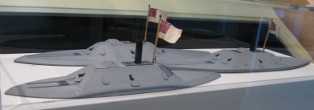
One thing to remember is that the South, for most of the civil war, was severely limited in its access to metals and heavy manufacturing capabilities. The design and construction of their ironclads reflect that.
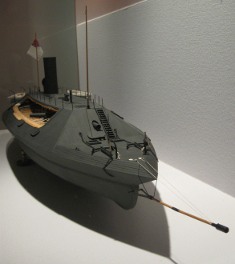
The Confederates had also realized that time was not on their side, so these ships had to be built fast. In order to do that they needed to be simplified in design without sacrificing any tactical advantage.
|
Some lessons learned from the CSS Virginia
The reason the CSS Virginia had to be destroyed by her own crew was her deep draught at 22 feet, prevented them from bringing her further up James River into safety.
This was an expensive lesson. Subsequent ironclads were designed with much shallower draught – rarely over 10 feet. This was a great help since they were pushed further and further up the various rivers by the Union.
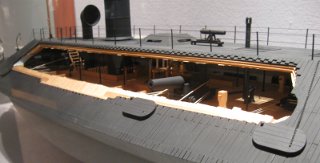
CSS Virginia's casemate (or shield) had rounded ends towards the stem and stern. The casemate was covered with two layers of two-inch iron bars. First (or bottom) layer horizontally and the second vertically. It must have been a daunting task to bend the bottom layer to take the rounded shape and fit well. Later ironclads had casemates with all flat panels – either six or eight facets.
The CSS Virginia had a cast iron pilot house. Later ironclads had pilot houses constructed in the same manner as the casemate with the same wrought iron bar covering.
|
The hulls were either converted steam vessels or their hull shapes were made simpler – flat bottoms and hard chines. This aided in keeping the draught low and shortened the construction time.
During the civil war the Confederate States had a total of 22 ironclads (some sources say 23). Here is an alphabetic list of the Confederate ironclads:
1. CSS Albemarle – Ironclad Ram 1864-1864
2. CSS Arkansas - Ironclad Ram 1862-1862
3. CSS Atlanta - Ironclad Ram 1862-1863, later USS Atlanta 1864-1869
4. CSS Baltic - Ironclad Ram 1862-1864
5. CSS Chicora - Ironclad Ram 1862-1865
6. CSS Columbia - Ironclad Ram 1864
7. CSS Fredericksburg - Ironclad Ram 1864-1865
8. CSS Georgia - Ironclad Floating Battery, 1862-1864
9. CSS Jackson (or CSS Muscogee) - Ironclad Ram, 1864-1865
10. CSS Louisiana – CSN Ironclad 1862
11. CSS Manassas – Ironclad Ram 1861
The first Confederate ironclad was the CSS Manassas. She was originally built as the icebreaker Enoch Train, in 1855. The ship was radically altered and ended up looking a lot like a turtle shell with a funnel in the middle.
She was odd looking and only projected 2 1/2 feet above water. She was designed as a ram mainly with a single gun firing forward. Her armor consisted of 1 1/2 inches of iron plating. This was enough to have enemy cannon balls bouncing off with minimal damage.
12. CSS Mississippi – Ironclad turret ship, built in England, seized while under construction and became HMS Wivern
13. CSS Nashville – CSN Ironclad 1862-1865
14. CSS North Carolina - Ironclad turret ship, built in England, seized while under construction and became HMS Scorpion
15. CSS Palmetto State – Ironclad Ram 1862-1865
16. CSS Richmond – Ironclad Ram 1862-1865
|
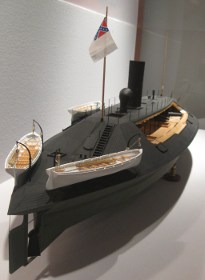
The CSS Richmond was one of several second generation Confederate Ironclads designed by John L Porter. Richmond was a prime example of the "new" confederate ironclads. One unusual feature was the spar torpedo, never before implemented on an ironclad.
17. CSS Savannah – Ironclad Ram 1863-1864
18. CSS Stonewall – Ironclad Ram 1865
19. CSS Tennessee – Ironclad Ram 1864-1864, later USS Tennessee, 1864-1867. The only Southern Ironclad to be comissioned in the US Navy after the war.
20. CSS Texas - Ironclad Ram, 1865
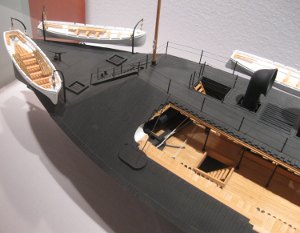
21. CSS Virginia - Ironclad Ram, 1862
The CSS Virginia is sometimes mistaken as the first ironclad of the Confederate Navy, or the Civil War for that matter. She is also mistakenly referred to as Merrimack (sometimes without the 'k'). The truth is, she was converted from the burnt hulk of the US steam frigate, the USS Merrimack.
The Virginia went berserk on the blockading Union navy vessels – all unarmored wooden sailing ships – on March 8, 1862. The next day she participated in the first ever engagement between ironclads at the battle of Hampton Roads, as she engaged the USS Monitor.
With her radical design, the CSS Virginia was part of changing naval warfare for ever.
22. CSS Virginia II - Ironclad Ram, 1864-1865
|


